Quick Answer
A high protein breakfast built on Mediterranean diet principles — think eggs, Greek yogurt, olive oil, nuts, and colorful vegetables — can supply 20-30 grams of protein while delivering anti-inflammatory compounds like omega-3 fatty acids and polyphenols. This combination supports steady energy, muscle maintenance, and reduced markers of chronic inflammation, according to research published on the Mediterranean diet by groups such as Harvard T.H. Chan School of Public Health.
Key Facts Table
| Fact | Detail |
|---|---|
| Recommended morning protein | 20-30g for satiety and muscle support |
| Core Mediterranean fats | Extra virgin olive oil, nuts, seeds, fatty fish |
| Anti-inflammatory markers | Reduced CRP levels linked to Mediterranean-style eating |
| Common inflammatory triggers | Refined sugar, processed meats, trans fats |
| Recognized standard | USDA Dietary Guidelines for Americans 2020-2025 |
Introduction
Mornings set the tone for how your body handles hunger, energy, and inflammation for the rest of the day. At Foodie Business, we’ve found that pairing a high protein breakfast with anti-inflammatory, Mediterranean-style ingredients isn’t just a trend — it’s one of the most researched approaches to sustainable eating in the United States today. This guide breaks down practical breakfast ideas that combine protein density with proven anti-inflammatory food science.
Why Protein Matters at Breakfast
The Science of Morning Protein
Protein slows gastric emptying and stabilizes blood sugar, which reduces mid-morning energy crashes. The Academy of Nutrition and Dietetics notes that spreading protein intake evenly across meals, rather than loading it at dinner, supports better muscle protein synthesis throughout the day.
How Much Is Enough?
Most adults benefit from 20-30 grams of protein at breakfast. That could look like:
- Three eggs with vegetables (about 18g) plus a side of Greek yogurt (10g)
- A protein smoothie with Greek yogurt, nut butter, and chia seeds
- Cottage cheese topped with berries and walnuts
Anti-Inflammatory Foods to Add In
What “Anti-Inflammatory” Actually Means
Anti-inflammatory foods contain compounds — polyphenols, omega-3 fatty acids, and antioxidants — that help counter chronic low-grade inflammation, a process linked to heart disease and type 2 diabetes risk according to the American Heart Association.
Breakfast-Friendly Anti-Inflammatory Ingredients
- Extra virgin olive oil (rich in oleocanthal)
- Fatty fish like salmon or sardines
- Berries, especially blueberries
- Turmeric and ginger
- Walnuts and flaxseed
- Leafy greens like spinach
Mediterranean Diet Recipes for Breakfast
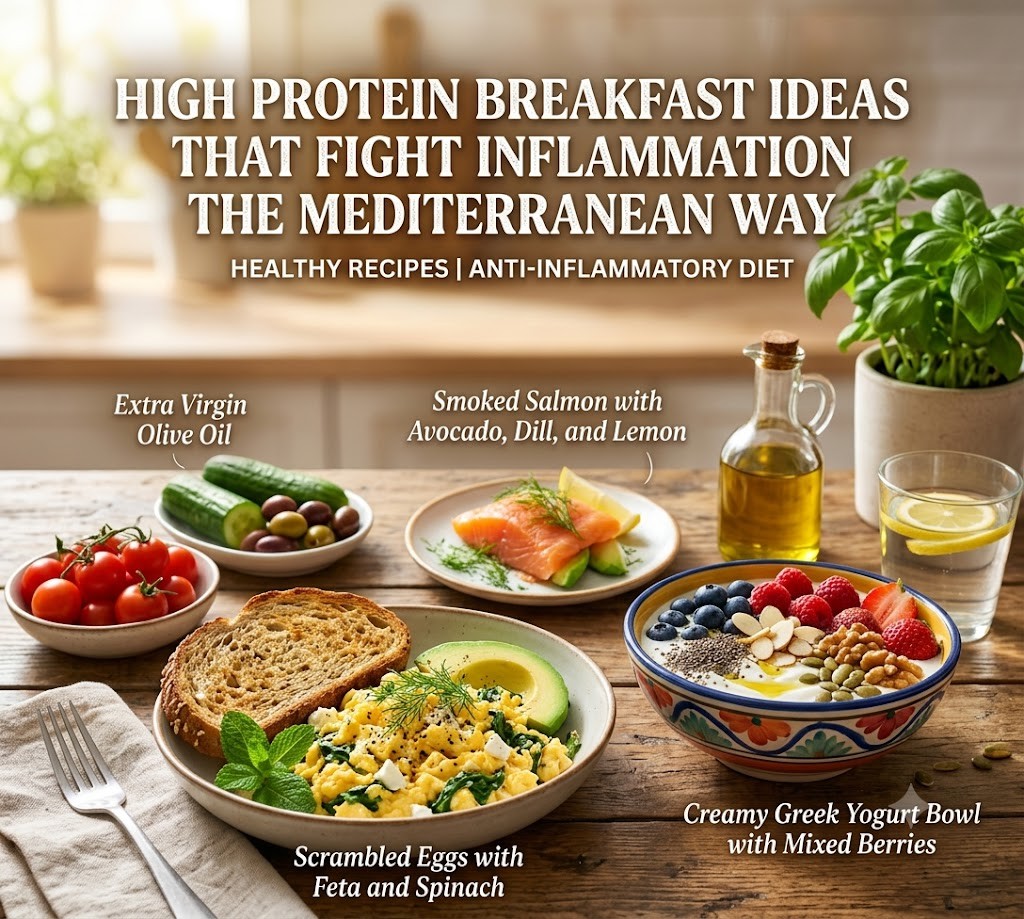
Recipe 1: Mediterranean Veggie Egg Scramble
Sauté spinach, tomatoes, and bell peppers in olive oil, then fold in whisked eggs and crumbled feta. This delivers roughly 22g of protein and a strong dose of vitamin C and healthy fats.
Recipe 2: Greek Yogurt Parfait with Walnuts and Honey
Layer full-fat Greek yogurt with walnuts, a drizzle of honey, and fresh figs. This combination provides probiotics, omega-3s, and around 18-20g of protein.
Recipe 3: Smashed Avocado and Sardine Toast
Whole grain bread topped with mashed avocado, sardines, lemon juice, and a pinch of chili flakes offers omega-3s, fiber, and roughly 20g of protein.
Comparison Table: Traditional vs. Mediterranean High Protein Breakfasts
| Feature | Traditional American Breakfast | Mediterranean High Protein Breakfast |
|---|---|---|
| Main fat source | Butter, processed oils | Extra virgin olive oil |
| Typical protein | Bacon, sausage | Eggs, yogurt, fish, legumes |
| Inflammatory risk | Higher (processed meats) | Lower (whole foods, polyphenols) |
| Fiber content | Low | Moderate to high |
| Sustainability for daily use | Often high in saturated fat | Balanced, heart-healthy |
Practical Tips for Meal Prep
- Batch-cook a vegetable and egg frittata on Sundays for grab-and-go slices
- Keep pre-portioned nuts and seeds at your desk or in your bag
- Swap butter for olive oil when pan-frying eggs
- Freeze portioned smoothie bags with spinach, berries, and yogurt
FAQ Section
What is the best high protein breakfast for weight management? Eggs with vegetables or a Greek yogurt bowl with nuts are excellent because they combine protein and fiber, which extends satiety.
Are Mediterranean diet recipes good for reducing inflammation? Yes. Multiple studies, including the PREDIMED trial, associate the Mediterranean diet with lower inflammatory markers compared to low-fat control diets.
Can I get enough protein without eating meat at breakfast? Absolutely. Greek yogurt, eggs, legumes, and nuts provide substantial plant- and dairy-based protein.
How much olive oil should I use in the morning? One to two tablespoons is a reasonable amount to support healthy fat intake without excess calories.
Is oatmeal part of an anti-inflammatory breakfast? Yes, especially topped with berries, walnuts, and cinnamon, which add fiber and antioxidants.
Does the Mediterranean diet allow dairy at breakfast? Yes, moderate amounts of yogurt and cheese are traditional components of the Mediterranean eating pattern.
What foods should I avoid for an anti-inflammatory breakfast? Limit refined sugar cereals, processed pastries, and fried processed meats.
Is a high protein breakfast necessary every day? It’s beneficial but not mandatory; consistency over days and weeks matters more than perfection daily.
Can smoothies count as a high protein Mediterranean breakfast? Yes, when built with Greek yogurt, nut butter, and seeds rather than fruit juice alone.
How long before I notice benefits from these breakfast changes? Many people report improved energy within one to two weeks, while inflammatory markers may take several weeks to shift.
Key Takeaways
- Aim for 20-30g of protein at breakfast for better satiety and muscle support
- Prioritize olive oil, fatty fish, nuts, and colorful produce for anti-inflammatory benefits
- Mediterranean-style breakfasts combine protein density with heart-healthy fats
- Simple swaps, like olive oil instead of butter, add up over time
Conclusion
Building a high protein breakfast around Mediterranean diet principles is a practical, well-researched way to support energy, satiety, and long-term inflammation management. Start with one recipe this week, such as the veggie egg scramble or Greek yogurt parfait, and build from there. Small, consistent changes at breakfast can meaningfully support your overall health goals.
