Quick Answer
Combining heart-healthy fats, lean proteins, and fiber-rich vegetables in meal-prepped portions supports both cardiovascular health and fat loss. The American Heart Association recommends limiting saturated fat and sodium while prioritizing lean protein and unsaturated fats, an approach that also supports satiety during weight management.
Key Facts Table
| Fact | Detail |
|---|---|
| AHA sodium recommendation | Under 2,300mg/day, ideally 1,500mg |
| Protein for fat loss | 1.2-1.6g per kg body weight daily |
| Heart-healthy fats | Olive oil, avocado, nuts, fatty fish |
| Fat loss protein sources | Chicken breast, egg whites, tofu, cottage cheese |
| Meal prep shelf life (fridge) | 3-4 days for most cooked proteins |
Introduction
Fat loss and heart health don’t have to be separate goals. In fact, many of the same foods that protect your cardiovascular system also support a sustainable calorie deficit. Foodie Business breaks down how to build heart-healthy, high protein meal prep routines that align with both goals, using guidance from organizations like the American Heart Association.
The Overlap Between Heart Health and Fat Loss
Shared Nutritional Principles
Both goals benefit from reducing refined carbohydrates and saturated fat while increasing fiber, lean protein, and unsaturated fats. This overlap makes meal planning simpler rather than requiring two separate approaches.
Why Protein Supports Both Goals
Protein preserves lean muscle mass during a calorie deficit and has a higher thermic effect than carbs or fat, meaning your body burns more calories digesting it.
Building a Heart Healthy High Protein Meal Prep Plan
Step 1: Choose Lean Proteins
- Chicken or turkey breast
- White fish and salmon
- Egg whites or whole eggs in moderation
- Tofu and tempeh
- Low-fat cottage cheese
Step 2: Add Heart-Healthy Fats in Moderation
- One tablespoon of olive oil per meal
- A quarter of an avocado
- A small handful of almonds or walnuts
Step 3: Fill Half the Plate with Vegetables
Non-starchy vegetables like broccoli, zucchini, and peppers add volume and fiber with minimal calories, supporting both satiety and cardiovascular health.
Three Meal Prep Recipes
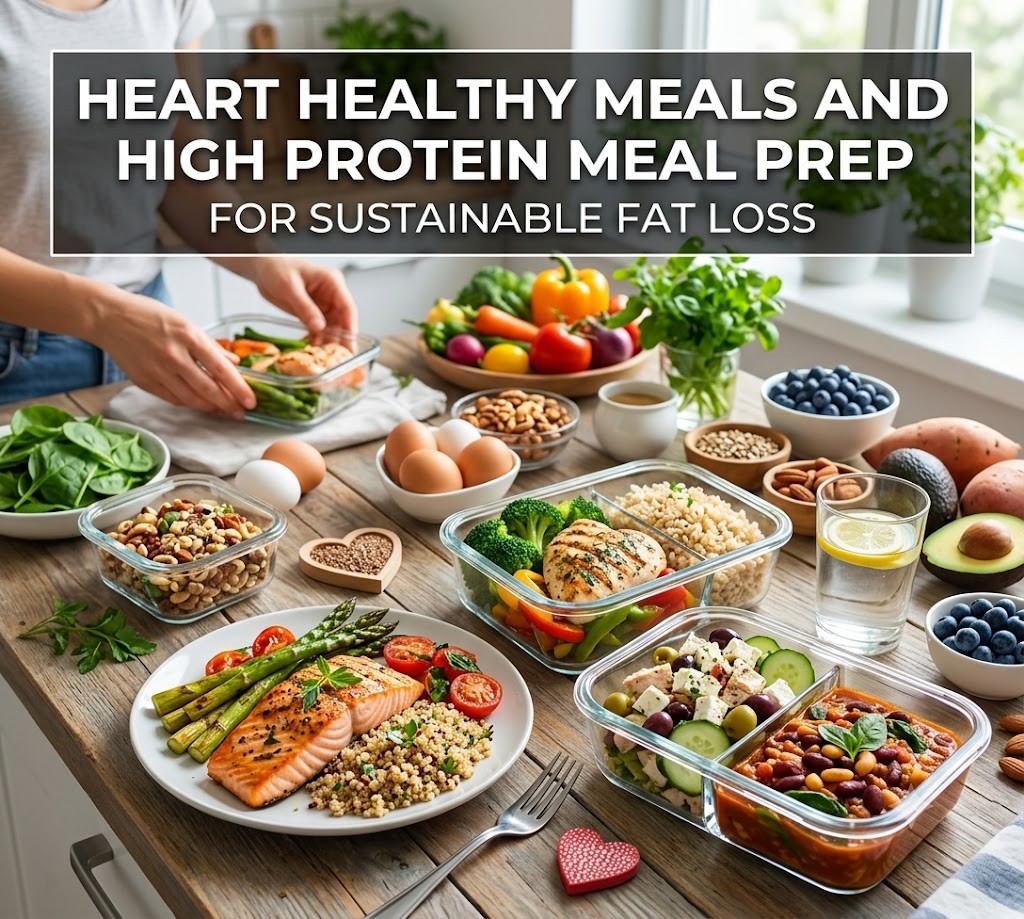
Recipe 1: Herb-Grilled Chicken with Roasted Vegetables
Season chicken breast with herbs and lemon, grill, and pair with roasted broccoli and sweet potato. This provides roughly 35g of protein and heart-healthy fiber.
Recipe 2: Salmon and Quinoa Bowls
Baked salmon over quinoa with steamed asparagus offers omega-3 fatty acids, fiber, and around 30g of protein per serving.
Recipe 3: Turkey and Vegetable Stir-Fry
Ground turkey stir-fried with bell peppers, snap peas, and a light soy-ginger sauce delivers lean protein with minimal saturated fat.
Comparison Table: Standard Meal Prep vs. Heart Healthy High Protein Meal Prep
| Feature | Standard Meal Prep | Heart Healthy High Protein Meal Prep |
|---|---|---|
| Fat source | Butter, processed oils | Olive oil, avocado, nuts |
| Sodium level | Often high (sauces, processed items) | Controlled, herb and spice focused |
| Protein per meal | Variable | 25-35g targeted |
| Vegetable proportion | Often low | Half the plate |
| Cardiovascular alignment | Inconsistent | Aligned with AHA guidance |
Practical Tips for Fat Loss and Heart Health
- Batch-cook proteins on Sunday for the week ahead
- Use herbs, citrus, and spices instead of high-sodium sauces
- Portion meals into containers to control calorie intake visually
- Choose whole grains like quinoa or brown rice over refined options
FAQ Section
What are the best foods for fat loss? Lean proteins, high-fiber vegetables, and moderate healthy fats support satiety while managing calorie intake effectively.
How much protein should I eat for fat loss and muscle preservation? Around 1.2-1.6 grams per kilogram of body weight daily is a commonly cited target in nutrition research.
Can heart healthy meals still support fat loss? Yes, since both approaches emphasize lean protein, fiber, and unsaturated fats over processed, high-sodium foods.
Is meal prep effective for weight management? Meal prep can improve portion control and reduce reliance on convenience foods, both of which support fat loss goals.
What oils are considered heart healthy? Extra virgin olive oil, avocado oil, and oils high in monounsaturated or polyunsaturated fats are generally recommended.
How long can prepped meals be stored safely? Most cooked proteins and meals last 3-4 days in the refrigerator when stored properly, per USDA food safety guidance.
Should I avoid all saturated fat for heart health? The American Heart Association recommends limiting, not eliminating, saturated fat, favoring unsaturated fats as the primary fat source.
What vegetables are best for fat loss meal prep? Non-starchy vegetables like broccoli, spinach, zucchini, and peppers offer volume and nutrients with few calories.
Can I meal prep on a budget while eating heart healthy? Yes, frozen vegetables, dried beans, and bulk lean proteins like chicken thighs can keep costs manageable.
How often should I update my meal prep recipes? Rotating recipes every 1-2 weeks can help maintain variety and prevent diet fatigue.
Key Takeaways
- Heart health and fat loss share overlapping nutritional strategies
- Prioritize lean protein, fiber-rich vegetables, and unsaturated fats
- Meal prep supports portion control and consistency
- Limit sodium and saturated fat in line with AHA guidance
Conclusion
Heart-healthy eating and fat loss aren’t competing goals — they reinforce each other through shared principles like lean protein, fiber, and healthy fats. By meal prepping with these priorities in mind, you can build a sustainable routine that supports both your cardiovascular health and your body composition goals over time.
