Quick Answer
Gluten free cooking relies on flour blends — typically combining a starch (like tapioca or rice flour) with a protein-rich flour (like almond or chickpea flour) to mimic wheat’s structure. This applies directly to gluten free breakfasts and pizza crusts, where texture depends heavily on flour selection and binding agents like xanthan gum, per guidance from the Celiac Disease Foundation.
Key Facts Table
| Fact | Detail |
|---|---|
| FDA gluten free threshold | Under 20 parts per million (ppm) |
| Common gluten free flours | Rice, almond, coconut, chickpea, oat (certified GF) |
| Binding agent for structure | Xanthan gum or psyllium husk |
| Best flour for pizza crust | Blend of rice flour + tapioca starch |
| Celiac disease prevalence (US) | Estimated 1 in 100 people, per Celiac Disease Foundation |
Introduction
Gluten free baking has moved far beyond dense, crumbly substitutes. With the right flour guide, home cooks can create satisfying gluten free breakfasts and pizzas that rival their wheat-based counterparts. Foodie Business breaks down the essential flours, blending strategies, and recipes for both meals.
Understanding Gluten Free Flours
Starch-Based Flours
Starches like tapioca, potato starch, and cornstarch add lightness and chew but lack structure on their own.
Protein-Rich Flours
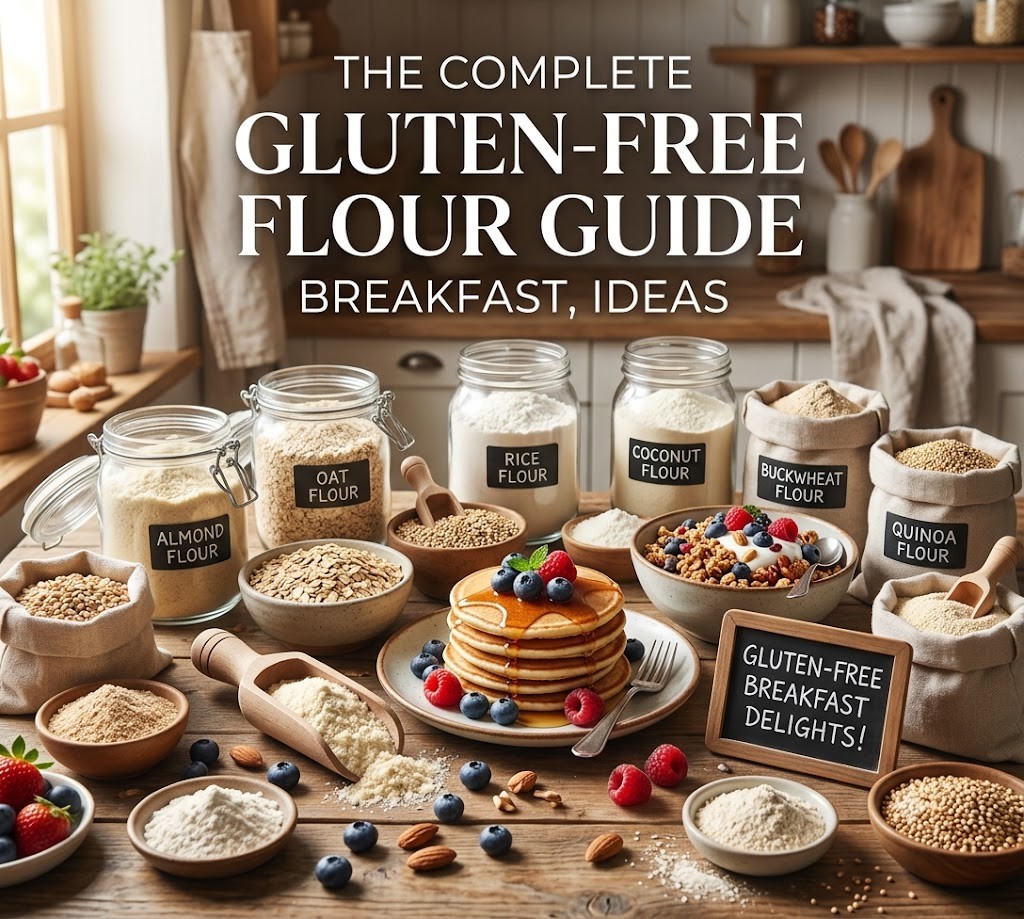
Almond flour, chickpea flour, and oat flour (certified gluten free) provide more structure and nutritional density, including protein and fiber.
Why Blending Matters
Wheat flour naturally contains gluten, which provides elasticity and structure. Gluten free baking typically requires blending 2-4 flours plus a binder like xanthan gum to replicate that texture, according to baking science resources from the Celiac Disease Foundation.
Gluten Free Flour Comparison Table
| Flour Type | Best Use | Protein Content | Texture Contribution |
|---|---|---|---|
| Rice flour | All-purpose base | Low | Light, slightly gritty |
| Almond flour | Breakfast baked goods | High | Moist, dense |
| Chickpea flour | Savory items, flatbread | High | Firm, nutty |
| Tapioca starch | Pizza crust, chewiness | Very low | Elastic, chewy |
| Oat flour (certified GF) | Pancakes, muffins | Moderate | Soft, hearty |
Gluten Free Breakfast Ideas
Recipe 1: Almond Flour Pancakes
Combine almond flour, eggs, a touch of coconut flour, and baking powder for fluffy, protein-rich pancakes that don’t require gluten-based structure.
Recipe 2: Oat Flour Muffins with Berries
Certified gluten free oat flour, mashed banana, and mixed berries create a moist muffin without needing additional binders.
Recipe 3: Chickpea Flour Vegetable Frittata Base
Whisk chickpea flour with water and spices to create a savory, egg-free “frittata” base, topped with vegetables and baked.
Gluten Free Pizza Crust
Building the Right Crust Blend
A reliable gluten free pizza crust typically combines rice flour and tapioca starch with xanthan gum for chew, plus olive oil for tenderness.
Step-by-Step Base Recipe
- Mix 1.5 cups rice flour, 0.5 cup tapioca starch, and 1 tsp xanthan gum
- Add warm water, olive oil, and yeast; let rise 30-45 minutes
- Press (don’t roll) the dough onto parchment paper, as gluten free dough is stickier
- Pre-bake the crust for 8-10 minutes before adding toppings
Practical Tips
- Always use certified gluten free oats if you have celiac disease, since standard oats are often cross-contaminated
- Let gluten free batters rest 10-15 minutes before baking to allow starches to hydrate
- Use a kitchen scale rather than cup measurements for more consistent gluten free baking results
- Store gluten free flour blends in airtight containers to maintain freshness
FAQ Section
What is the best all-purpose gluten free flour blend? A blend of rice flour, tapioca starch, and a binder like xanthan gum works well for most baking applications.
Why does gluten free pizza dough need xanthan gum? Xanthan gum mimics the elasticity gluten normally provides, helping the crust hold together and achieve a chewy texture.
Are oats naturally gluten free? Oats are naturally gluten free but are often cross-contaminated during processing, so certified gluten free oats are recommended for those with celiac disease.
What gluten free flour works best for pancakes? Almond flour or a store-bought gluten free pancake blend typically produces the best texture.
Can I substitute almond flour for rice flour directly? Not always; almond flour is denser and more moist, so recipes usually need adjustment rather than a 1:1 swap.
Is chickpea flour good for breakfast recipes? Yes, it works well in savory breakfast items like frittata bases or flatbreads.
How do I keep gluten free pizza crust from being too crumbly? Adding a binder like xanthan gum and pre-baking the crust before adding toppings helps improve structural integrity.
What does the FDA require for “gluten free” labeling? Products must contain fewer than 20 parts per million of gluten to carry the gluten free label.
Can gluten free flours be used interchangeably in all recipes? No, different flours have different absorption and binding properties, so recipes are usually formulated for specific blends.
Is gluten free bread lower in calories than regular bread? Not necessarily; calorie content depends on the specific ingredients and can vary widely between products.
Key Takeaways
- Gluten free baking typically requires blending starches and protein-rich flours
- Xanthan gum or psyllium husk helps replicate gluten’s structural role
- Almond and oat flours work well for gluten free breakfasts
- Rice flour and tapioca starch blends are effective for gluten free pizza crusts
Conclusion
With the right flour blends and techniques, gluten free breakfasts and pizzas can achieve satisfying texture and flavor without wheat. Understanding how different flours behave — and why binders like xanthan gum matter — makes gluten free cooking far more approachable and consistent for everyday meals.
