Quick Answer
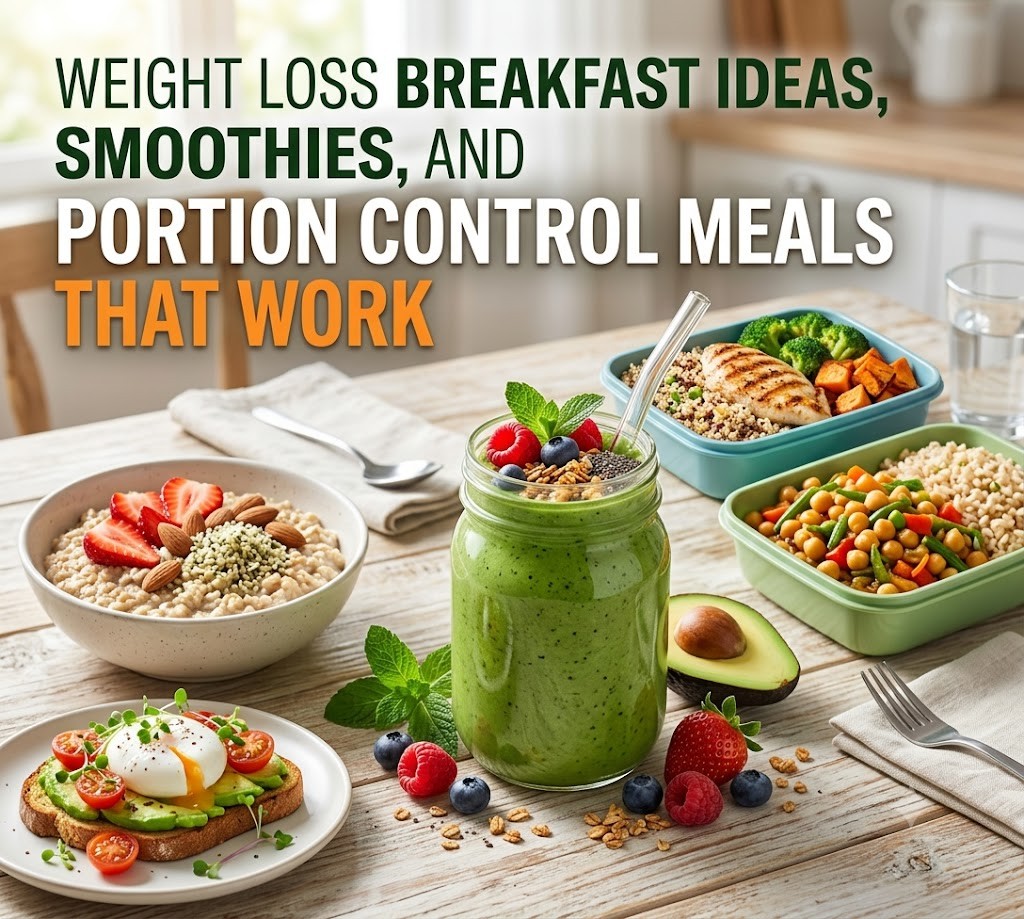
Effective weight loss breakfasts combine protein, fiber, and controlled portions to manage hunger throughout the morning. Healthy smoothies made with whole fruit, protein, and vegetables can support this when portioned correctly, while visual portion control tools like the “plate method” endorsed by the USDA’s MyPlate help maintain consistency without strict calorie counting.
Key Facts Table
| Fact | Detail |
|---|---|
| Weight loss breakfast protein target | 20-30g |
| Effective smoothie portion size | 12-16 oz for a meal replacement |
| USDA plate method | 1/2 plate vegetables, 1/4 protein, 1/4 grains |
| Common smoothie pitfall | Excess fruit/juice raising calorie and sugar content |
| Portion control tool | Hand-size measurements (palm = protein, fist = carbs) |
Introduction
Weight loss doesn’t require extreme restriction — it requires consistency, adequate protein, and awareness of portions. Foodie Business focuses on realistic breakfast ideas, smoothie recipes, and portion control strategies that fit into everyday American routines without constant calorie tracking.
Building a Weight Loss Breakfast
Why Breakfast Composition Matters
A protein- and fiber-rich breakfast helps regulate appetite hormones like ghrelin, reducing the likelihood of overeating later in the day, according to nutrition research on meal timing and satiety.
Weight Loss Breakfast Ideas
- Veggie omelet with two eggs and a slice of whole grain toast
- Overnight oats with chia seeds, berries, and a scoop of protein powder
- Cottage cheese bowl with pineapple and a sprinkle of flaxseed
Healthy Smoothie Recipes for Weight Loss
Smoothie Building Blocks
A weight-loss-friendly smoothie should include a protein source, a fiber source, a small amount of fruit, and liquid — avoiding fruit juice, which adds sugar without fiber.
Three Smoothie Recipes
Green Protein Smoothie: Spinach, unsweetened almond milk, half a banana, protein powder, and a tablespoon of almond butter.
Berry Fiber Smoothie: Mixed berries, Greek yogurt, chia seeds, and unsweetened almond milk.
Tropical Recovery Smoothie: Frozen mango, pineapple, spinach, and coconut water with a scoop of collagen or protein powder.
Mastering Portion Control
The Plate Method
The USDA’s MyPlate model suggests filling half your plate with vegetables, a quarter with lean protein, and a quarter with whole grains or starchy vegetables — a simple visual guide without weighing food.
Hand-Based Portion Guide
- Palm-sized portion = protein serving
- Cupped hand = carbohydrate serving
- Thumb-sized portion = fat serving
- Fist-sized portion = vegetable serving
Comparison Table: Store-Bought Smoothie vs. Homemade Weight Loss Smoothie
| Feature | Store-Bought Smoothie | Homemade Weight Loss Smoothie |
|---|---|---|
| Added sugar | Often high | Controlled, minimal |
| Protein content | Variable, often low | Deliberately included |
| Fiber content | Often low (juice-based) | Higher (whole fruit, seeds) |
| Portion size | Often oversized | Controlled to 12-16 oz |
| Cost | Higher per serving | Lower per serving |
Practical Tips
- Use a food scale occasionally to recalibrate your sense of portion sizes
- Pre-portion smoothie ingredients into freezer bags for quick morning blending
- Avoid drinking smoothies straight from a large cup; measure into a standard glass
- Pair breakfast with a source of healthy fat to improve satiety
FAQ Section
What is the best breakfast for weight loss? A breakfast with 20-30g of protein and fiber-rich carbohydrates, such as a veggie omelet or overnight oats, tends to support satiety and weight management.
Are smoothies good for weight loss? They can be, if portioned correctly and built with whole fruit, protein, and limited added sugar rather than fruit juice concentrates.
How can I practice portion control without counting calories? Visual tools like the USDA’s plate method or hand-based portion guides can help without requiring precise tracking.
Is skipping breakfast better for weight loss? Research is mixed; some people do well with intermittent fasting, while others benefit more from a balanced breakfast for appetite control.
What ingredients should I avoid in weight loss smoothies? Fruit juice, added sugars, and large amounts of high-calorie mix-ins like nut butter beyond a tablespoon can add up quickly.
How much protein powder should I use in a smoothie? Typically one scoop, providing about 20-25g of protein, is sufficient for a meal-replacement smoothie.
Can portion control alone lead to weight loss? Yes, for many people, portion control combined with nutrient-dense food choices is effective without strict calorie counting.
What is a good vegetable to add to smoothies without changing the taste much? Spinach is popular because it blends smoothly and has a mild flavor compared to other greens.
How often should I eat a weight loss breakfast? Consistency, such as daily or most days, tends to support better appetite regulation than sporadic breakfast habits.
Is it okay to have a smoothie as a snack instead of a meal? Yes, as a snack it should be smaller, around 8-10 oz, compared to a full meal-replacement smoothie.
Key Takeaways
- Protein- and fiber-rich breakfasts support appetite regulation for weight loss
- Homemade smoothies allow better control over sugar and portion size
- The USDA plate method and hand-based portions simplify portion control
- Avoid fruit juice-heavy smoothies that add sugar without fiber
Conclusion
Sustainable weight loss comes from consistent habits, not extreme restriction. By building protein-rich breakfasts, mindful smoothie recipes, and practical portion control habits into your routine, you create a foundation that’s easier to maintain long-term than restrictive diets. Start with one change this week, whether it’s a new breakfast recipe or the plate method at lunch, and build momentum from there.
