Quick Answer
Magnesium and vitamin D work together to support immune function, bone health, and muscle recovery. Foods like fatty fish, fortified dairy, pumpkin seeds, and leafy greens provide both nutrients, and the National Institutes of Health Office of Dietary Supplements notes that many Americans fall short of recommended magnesium and vitamin D intake, making food-based strategies important.
Key Facts Table
| Fact | Detail |
|---|---|
| Adult magnesium RDA | 310-420mg/day depending on age and sex |
| Adult vitamin D RDA | 600-800 IU/day (higher for older adults) |
| Top magnesium foods | Pumpkin seeds, almonds, spinach, black beans |
| Top vitamin D foods | Salmon, fortified milk, egg yolks, mushrooms |
| Common deficiency signals | Fatigue, muscle cramps, frequent illness |
Introduction
Immune resilience depends on more than just vitamin C. Magnesium and vitamin D play foundational roles in immune cell function, and deficiencies in either are surprisingly common across the U.S. population. Foodie Business breaks down which foods deliver these nutrients most effectively, along with practical ways to include them in daily meals.
Why Magnesium Matters for Immunity
The Role of Magnesium in the Body
Magnesium supports over 300 enzymatic reactions, including those involved in inflammation regulation and immune cell signaling, according to the NIH Office of Dietary Supplements.
Best Magnesium-Rich Foods
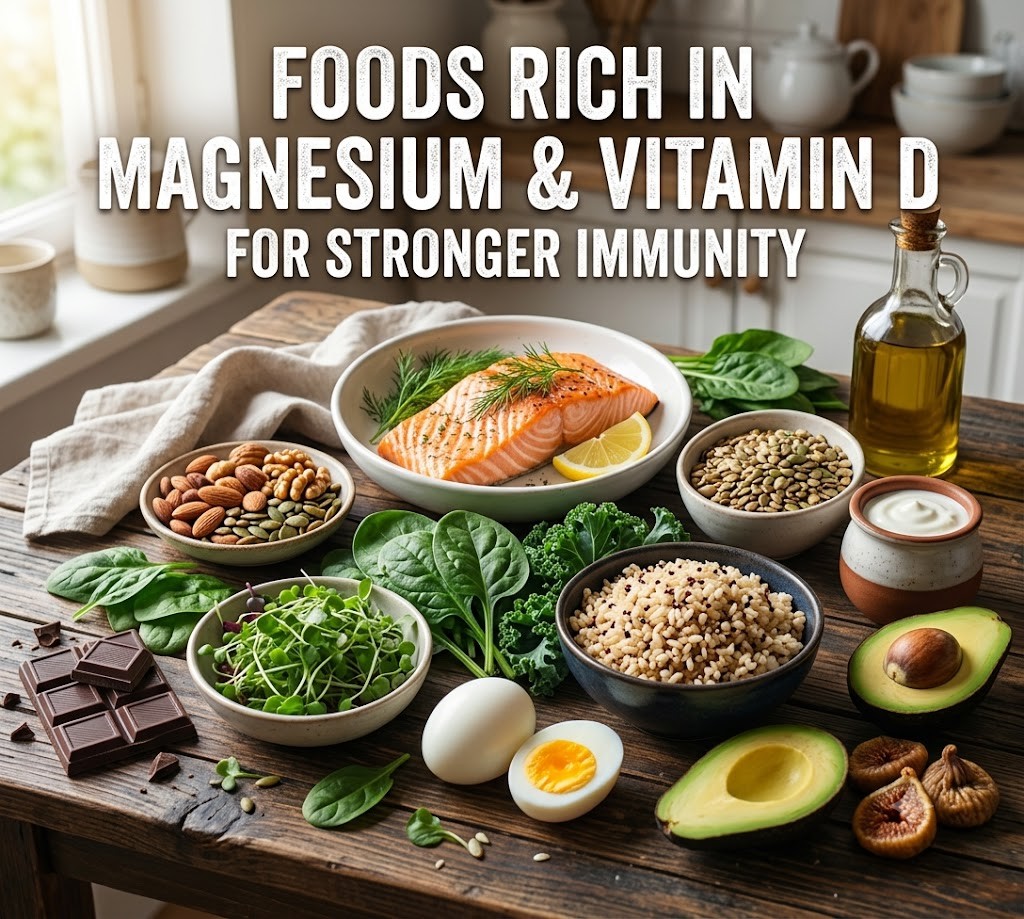
- Pumpkin seeds (about 150mg per ounce)
- Almonds and cashews
- Spinach and Swiss chard
- Black beans and edamame
- Dark chocolate (70% cacao or higher)
Why Vitamin D Matters for Immunity
Vitamin D’s Immune Function
Vitamin D receptors are present on immune cells, and adequate levels are associated with better regulation of both innate and adaptive immune responses, per research summarized by the National Institutes of Health.
Best Vitamin D-Rich Foods
- Fatty fish like salmon and mackerel
- Fortified milk and plant milks
- Egg yolks
- UV-exposed mushrooms
- Fortified cereals
Combining Magnesium and Vitamin D for Better Absorption
Magnesium is required to convert vitamin D into its active form. This means eating magnesium-rich foods alongside vitamin D sources can improve how effectively your body uses vitamin D.
Sample Combination Meal
Baked salmon (vitamin D) with a side of sautéed spinach and pumpkin seeds (magnesium) creates a nutrient pairing that supports both pathways in one plate.
Immune Boosting Foods Beyond Magnesium and Vitamin D
- Citrus fruits for vitamin C
- Garlic for allicin compounds
- Yogurt for probiotics
- Bell peppers for antioxidants
Comparison Table: Magnesium vs. Vitamin D Food Sources
| Nutrient | Best Food Sources | Approximate Amount | Absorption Note |
|---|---|---|---|
| Magnesium | Pumpkin seeds, spinach, almonds | 74-168mg per serving | Best with adequate protein intake |
| Vitamin D | Salmon, fortified milk, egg yolks | 400-570 IU per serving | Fat-soluble, absorbed better with dietary fat |
Practical Tips
- Add a handful of pumpkin seeds to salads or oatmeal
- Choose fortified plant milk if you avoid dairy
- Include fatty fish in meals twice a week
- Cook leafy greens with a bit of olive oil to support nutrient absorption
FAQ Section
Can I get enough vitamin D from food alone? It’s difficult for many people, especially with limited sun exposure, so fortified foods and fatty fish are important, and some individuals may need supplements after consulting a healthcare provider.
What foods are highest in magnesium? Pumpkin seeds, almonds, spinach, and black beans are among the richest natural sources.
Do magnesium and vitamin D interact? Yes, magnesium is necessary to metabolize vitamin D into its active form in the body.
What are signs of magnesium deficiency? Common signs include muscle cramps, fatigue, and irritability, though a healthcare provider should confirm any deficiency.
Are plant-based sources of vitamin D effective? UV-exposed mushrooms and fortified plant milks can provide meaningful vitamin D for those avoiding animal products.
How does vitamin D support the immune system? It helps regulate immune cell activity and has been studied for its role in reducing susceptibility to certain respiratory infections.
Can too much magnesium from food cause problems? Excess magnesium from food alone is rare, since the kidneys typically excrete surplus amounts; supplement overuse is more likely to cause issues.
Is dark chocolate really a good magnesium source? Yes, dark chocolate with high cacao content offers a meaningful amount of magnesium along with antioxidants.
Should I get my vitamin D levels tested? If you suspect a deficiency, a blood test ordered by a healthcare provider is the most reliable way to confirm your levels.
What immune boosting foods pair well with magnesium and vitamin D sources? Citrus fruits, garlic, and yogurt complement magnesium and vitamin D foods for broader immune support.
Key Takeaways
- Magnesium and vitamin D work together, so eating them in combination improves effectiveness
- Pumpkin seeds, spinach, and almonds are top magnesium sources
- Salmon, fortified milk, and egg yolks are reliable vitamin D sources
- Many Americans fall short of both nutrients, making food-based strategies practical
Conclusion
Supporting your immune system starts with consistent, food-based nutrient intake rather than relying on a single “superfood.” Prioritizing magnesium and vitamin D-rich foods together, such as salmon with spinach or fortified cereal with pumpkin seeds, offers a practical, evidence-informed way to support immunity through everyday meals.
